What the Desert Taught Us About Marketing to Humans: Lessons from the Brands That Owned Coachella 2026
My friend and podcast guest Beth Nydick said something that I haven’t stopped thinking about since it aired on Event About It.
“The difference between marketing and media is marketing is about rules and frameworks. Media is about how do you make me feel?”
Coachella 2026 was a media masterclass.
Not because the brands had the biggest budgets. Not because they hired the right agency. But because the ones that won understood something most B2B event marketers are still figuring out: your audience doesn’t want to be marketed to. They want to feel something. And the festivalization of B2B events – the blurring of the line between entertainment and business experience – is already here whether your team is ready or not.
I spent more time than I’d like to admit analyzing what happened in the desert this April. The patterns are too important to ignore. So here are the lessons, translated directly for the event marketers, field marketers, and experience designers who have to fill a room, justify a budget, and prove it mattered on Monday morning.
Lesson 1: Your In-Room Audience Is Half the Room
Justin Bieber
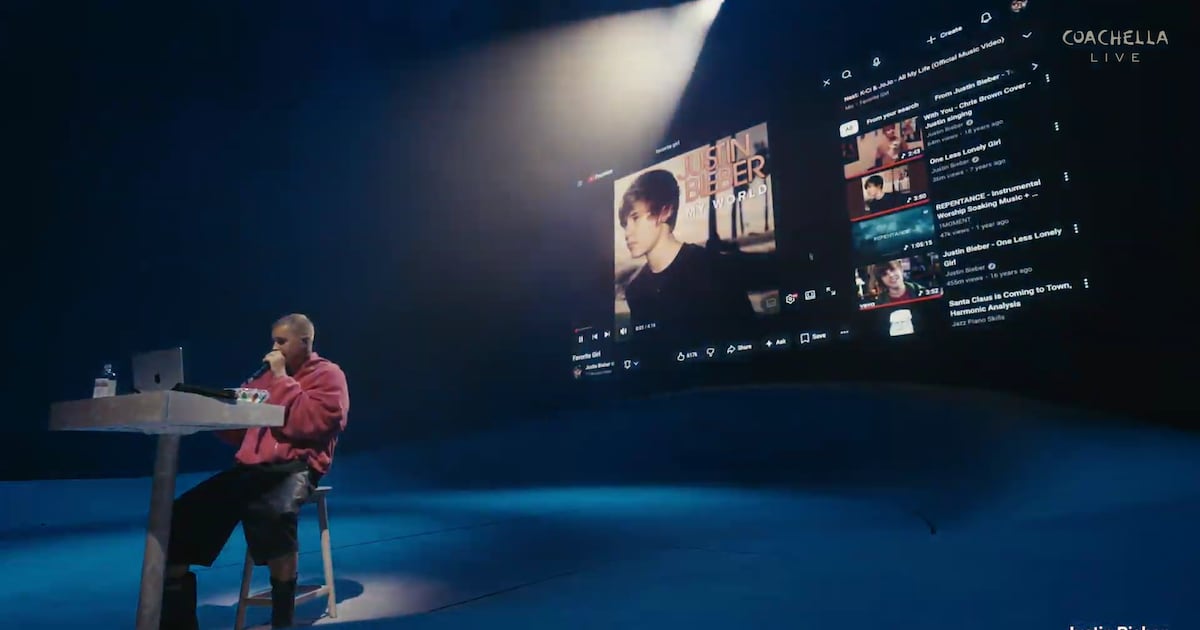
Bieber spent weeks on Twitch before Coachella, streaming himself in the studio, skating, being openly vulnerable about his comeback. By showtime, the digital audience wasn’t tuning in. They were showing up. There’s a difference, and it matters enormously.
Then he got on stage. And instead of ignoring the millions watching online, he read YouTube comments live and talked back to the chat in real time. 500,000 people were in the desert. Millions were online. Everyone was already invested. He built the audience before the event and designed for them during it.
And yes, he complained about being on mute and the wifi. Which is the most relatable thing a headliner has ever done and the digital audience loved every second of it.
The B2B Translation: If your speakers aren’t acknowledging the digital room, you’re hosting two events and only designing one of them.
Your hybrid strategy cannot be “we’ll also stream it.” That is not a hybrid strategy. That’s a recording. The Bieber approach starts months before the event with intentional audience-building, and it doesn’t stop when the in-person crowd fills the room. The question to ask your speakers before your next event: do you know who’s watching? Because Bieber did.
Lesson 2: Don’t Sponsor the Moment. Time It.
Rhode
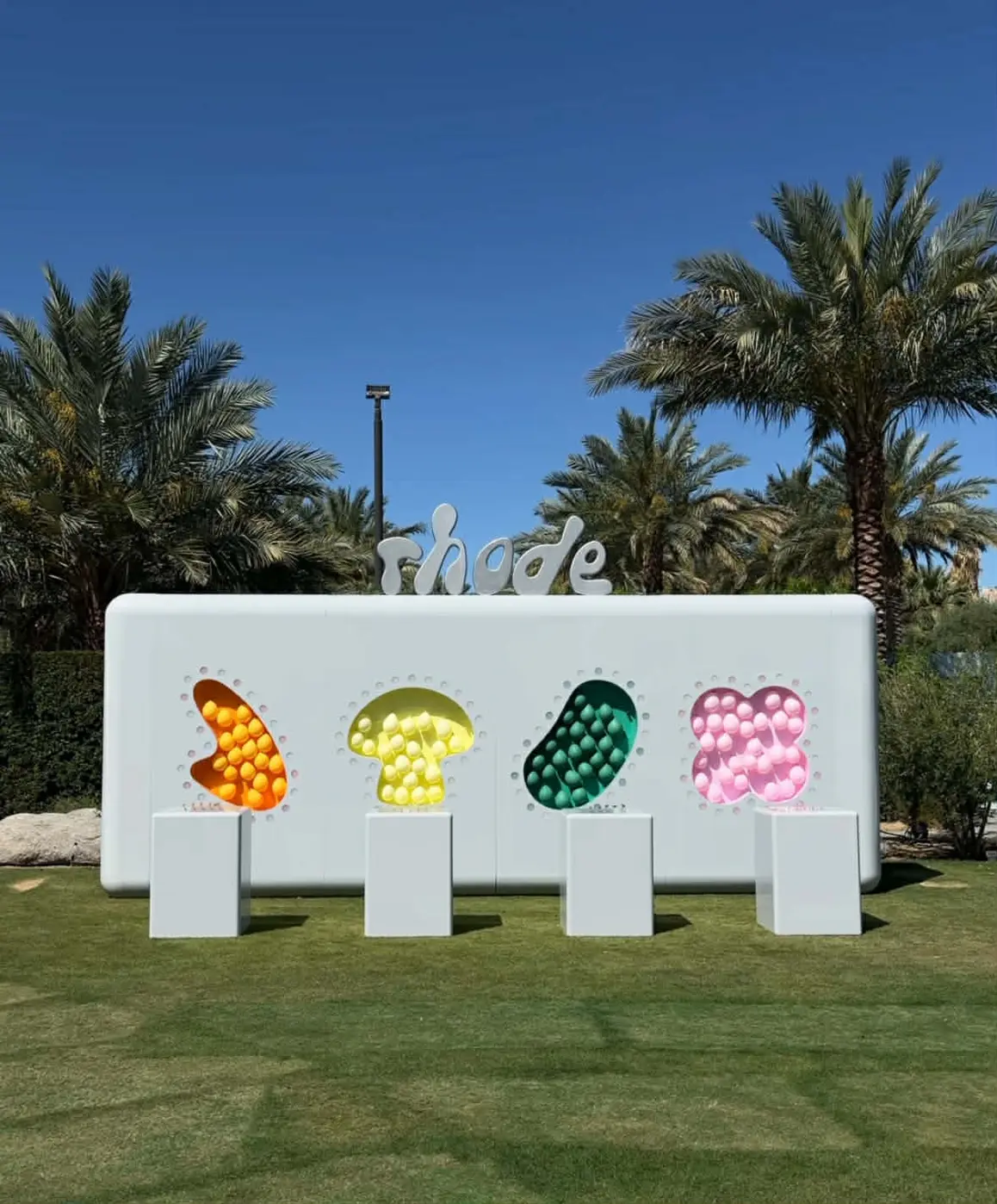
Rhode didn’t buy a stage. They timed one.
Private activation the night of Bieber’s headlining set, co-sponsored with Sephora on the touch-up room. Product drop two days later, while the internet was still talking. Hailey wore the lip tint, the clips spread, and the brand earned an estimated $10 million in media value from a single weekend.
Alignment beats ad spend. Timing makes alignment land.
This is the part most brands miss. They obsess over the creative concept and underinvest in the sequencing. Rhode didn’t just show up authentically. They engineered a three-act structure: private activation, cultural peak, product drop. Each beat landed because it was timed to the exact moment the audience was already paying attention.
The B2B Translation: Your customer moment needs the right story AND the right window. One without the other is either lucky or forgettable.
Think about your last customer event. Did you time the announcement to the moment when your audience was most emotionally invested in the room? Or did you drop the news in the opening keynote before anyone had their coffee? Rhode is a skincare brand. They shouldn’t be teaching event strategy lessons this sharp. And yet.
Lesson 3: The Thing They Build With You Is More Valuable Than the Thing You Give Them
Gap
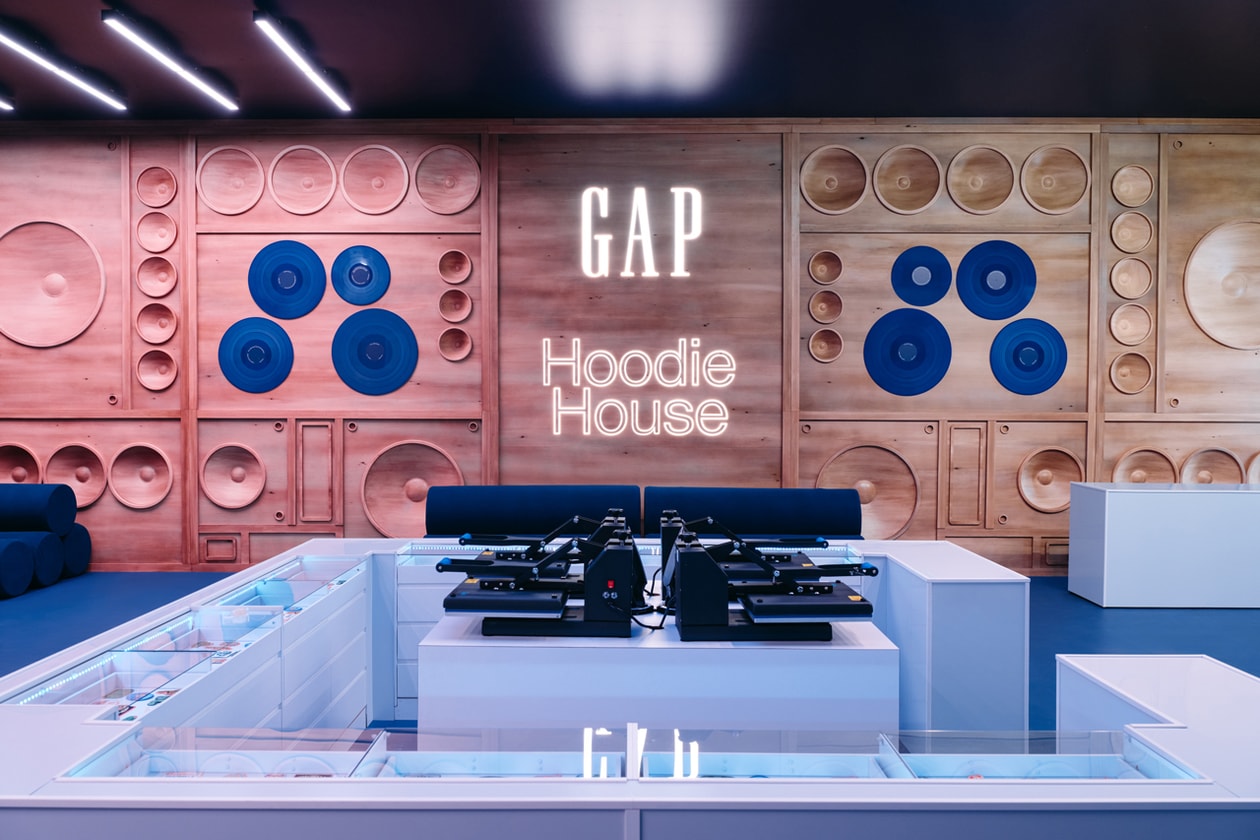
Gap built the Hoodie House, a full customization studio where festival-goers stitched, screen-printed, and styled their own limited-edition Coachella hoodie. A $68 hoodie became a status object. People stood in line for it. They wore it out of the activation and into the crowd, making every wearer a walking piece of organic media for the rest of the weekend.
They didn’t sell product. They sold participation. There’s a real difference between those two things, and most B2B event teams are still on the wrong side of it.
Worth noting: Gap didn’t show up cold. They had spent months building cultural credibility with KATSEYE before Coachella. KATSEYE performed at the festival. By the time the Hoodie House opened, the audience already trusted the pairing. The activation was the payoff of a partnership that was already in motion.
The B2B Translation: Stop doing demos. Build a room where people make something with you.
The stickiest memory your attendee carries from your event isn’t the keynote they half-watched. It’s the moment they made a decision, created something, or did something with their hands. What is the Hoodie House at your next event? What are people building with you, not just receiving from you?
Lesson 4: The Phone-Free Play Is the Flex
Pinterest × e.l.f. Cosmetics
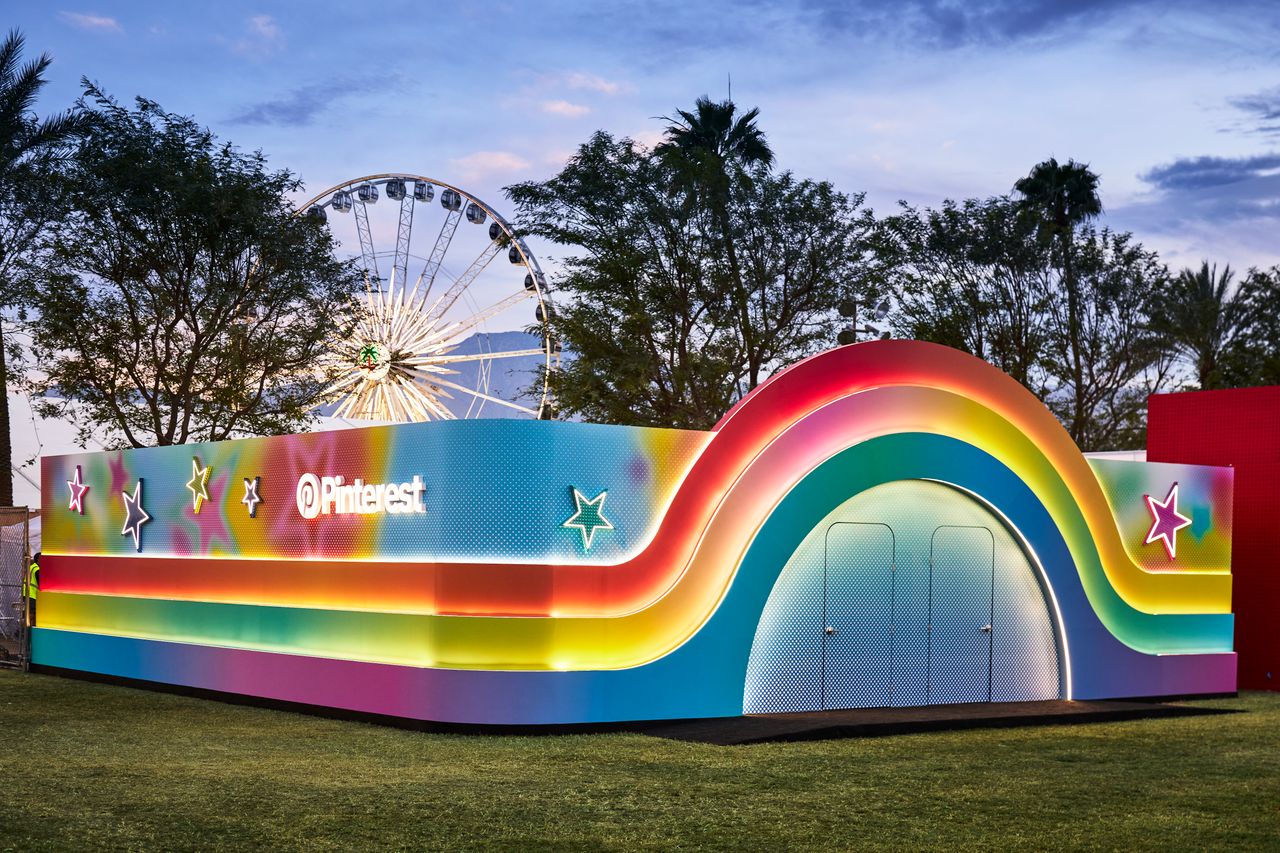
Pinterest is a social media platform. They showed up to a music festival where every brand was fighting for the feed and built the only phone-free activation at Coachella 2026.
While everyone else optimized for content capture, Pinterest built a phone-free lounge with Polaroids, journaling stations, and charm-making experiences. e.l.f. Cosmetics provided the product experience inside it. Pinterest brought the cultural insight from their own data: searches for “analog aesthetic” are up 260% on their platform. e.l.f. brought the touch-up stations. Neither activation works without the other, and both brands were more themselves because of the partnership.
The scarcest thing at a festival is presence. They sold it back to people who forgot they wanted it.
The B2B Translation: In a feed full of noise, the loudest move is silence with intention.
This is the permission slip your event team needs to do the thing that feels too counterintuitive. The session format nobody else is trying. The networking concept that doesn’t involve badge scanning and a cocktail hour. Pinterest, a company whose entire business model is digital engagement, told people to put their phones down. And it worked because it was true to who they are.
The question for your next event: what is the counterintuitive thing your brand could do that would only make sense coming from you?
Lesson 5: Swag Is a Cost Center. Merch Is a Product Line.
SKYLRK
SKYLRK reportedly moved over $5 million in weekend-one sales at Coachella. Not as a sponsor. Not as a giveaway. As a real brand that people paid full price for, because the product was designed to be worn, not tossed in a conference bag and forgotten at the airport.
That number lands differently when you compare it to what most B2B brands spend on branded water bottles, tote bags, and pens that end up in hotel room trash cans by checkout.
The B2B Translation: If you wouldn’t buy it, don’t print your logo on it.
The question before your next merch order isn’t “what’s the unit cost?” It’s “would someone wear this to dinner?” If the answer is no, you have a cost center. If the answer is yes, you might have a brand asset. SKYLRK didn’t accidentally move $5M in merchandise. They designed for desire, not distribution.
Lesson 6: Host. Don’t Sponsor.
Aperol
Aperol didn’t slap a logo on a stage. They built the Aperol Day Club. A destination with its own gravity, its own ritual, and its own rules. People didn’t wander in accidentally. They went there on purpose, stayed longer than they planned, and left with a memory tied to the brand.
Sponsors rent attention. Hosts own it.
This is Aperol’s fourth consecutive year as the official spritz partner at Coachella. They didn’t just show up and buy the badge. They iterated. They built something that got better because they kept showing up. That kind of compound brand equity doesn’t happen from a one-and-done activation. It happens from consistent presence that earns trust over time.
The B2B Translation: The best field event is the one your competitors wish they’d thrown.
Stop asking “how do we get noticed at this conference?” Start asking “what is the event people are already talking about, and how do we own that experience entirely?” There is a version of your next customer dinner, your next VIP summit, your next executive roundtable, that people would have attended even without the free drinks. Build that version.
Lesson 7: Everyone Else Was Chasing the Moment. Barbie Was Barbie.
Barbie

Barbie’s “You Can Be Any Barbie” booth didn’t try to be cool. It didn’t pivot for the festival audience or reinvent itself for a younger demographic. It leaned harder into Barbie. Hot pink walls. Charm bar. Professional portrait studio. Disco ball. An experience that was unmistakably, unapologetically itself.
No pivot. No reinvention. Just a sharper version of what the brand already is, placed in front of people already primed to receive it. The brands that got lost in the desert at Coachella 2026 were the ones who chased cultural proximity without having a clear point of view of their own. Barbie wasn’t interested in that conversation.
The B2B Translation: Don’t dress up for the audience. Show up as yourselves, louder.
This is the authenticity lesson running through every activation in this post. Rhode was authentically timed. Pinterest was authentically counterintuitive. Barbie was authentically Barbie. The brands that landed all knew exactly who they were before they bought the activation. The ones that got lost were optimizing for the room’s approval instead of their own identity.
Your audience has been to every conference. They have seen every booth. They know the difference between a brand that showed up fully and a brand that dressed up for the occasion. Be the former.
Lesson 8: The Best Tech at Your Event Solves a Behavior Problem
Heineken
This is Heineken’s 23rd year at Coachella. They have been doing this long enough to just show up, pour beer, and call it a sponsorship. Instead, they built The Clinker.
A smartband that wraps around your beer, syncs your Spotify data, and lights up when it detects a music match with someone nearby. A cheers becomes a conversation starter. A conversation starter becomes a connection. A connection becomes something that lives beyond the weekend.
The Spotify integration wasn’t a feature. It was the whole product. Without that data partnership, The Clinker is just a bracelet. The technology solved a specific, real behavior problem: live events are full of brief interactions that go nowhere. Most people leave a festival, or a conference, having talked to the same small group they arrived with. Heineken built something that gave those fleeting interactions a mechanism.
The B2B Translation: Stop building tech that demos well on stage. Build tech that makes humans want to talk to each other.
The most underserved problem in B2B events isn’t content quality or production value. It’s that we put thousands of buyers and sellers in the same room and leave connection entirely to chance. What is the B2B equivalent of The Clinker? What technology at your event is solving a behavior problem, not just adding a digital layer to an analog experience?
The Through Line Nobody Labeled
Look at all eight lessons and one pattern emerges that none of the brands explicitly named.
Every activation that won was built from the inside out. Rhode knew exactly who they were and timed their presence to amplify that. Pinterest knew exactly who they were and did the thing that felt most like them, even when it was counterintuitive. Barbie knew exactly who they were and refused to modify it for the room. Heineken knew exactly what problem their audience had and built the thing that solved it.
They out-knew themselves.
That is what Beth was talking about. Marketing is about rules and frameworks. Media is about how you make someone feel. Every brand on this list made a decision, consciously or not, to operate from their identity rather than their category. The result was that their audience felt something specific, something that could only have come from that brand, in that moment, designed exactly that way.
That’s not a Coachella strategy. That’s the whole game.
What This Means for B2B Event Strategy
The festivalization of B2B events is not a trend you can afford to watch from a distance. It is already happening. Your attendees have been to Coachella, or watched it from the chat. They have experienced Rhode and Gap and Pinterest operating at this level. They are coming to your events with those experiences in their body memory.
The badge scanner and the branded tote bag and the sponsored lunch are not competing against other B2B events anymore. They are competing against how your audience has been made to feel everywhere else.
Three questions worth taking into your next planning cycle:
How are you designing for the audience you can’t see, not just the one standing in front of you?
Who are you building with that makes you more of who you already are?
And when your attendee walks out of your event, what is the feeling they carry with them?
Those aren’t festival questions. They are the questions.
Megan Martin is the founder of M Squared Dynamics, a consulting and strategy firm specializing in audience insights, event-led growth, marketing alignment, and data-drivenstrategy. She is the host of Event About It podcast, co-founder of Opportunity Hunters, and speaker.
Want more field notes at the intersection of event, sales, marketing, and the humans in the room?
Connect with Megan Martin:
Newsletter: Subscribe to Step and Repeat
Instagram: @M2Dynamics
Instagram: @EventAboutIt
LinkedIn: Megan Martin, CMP